
Protecting Your Lawn from Drought Stress in Texas Heat
Summer weather in Houston can be brutal on lawns. With high temperatures in the 90’s and consistent days or weeks with very little rain, drought stress is a common lawn problem for Texas homeowners. You can protect your grass by knowing how to properly water, when to water, and how to spot signs of stress. You may also consider lawn treatments like Aggieland Green’s Stress Helper to give your lawn the extra support it needs to bounce back from damage and dry conditions.
How to Spot Signs of Drought Stress
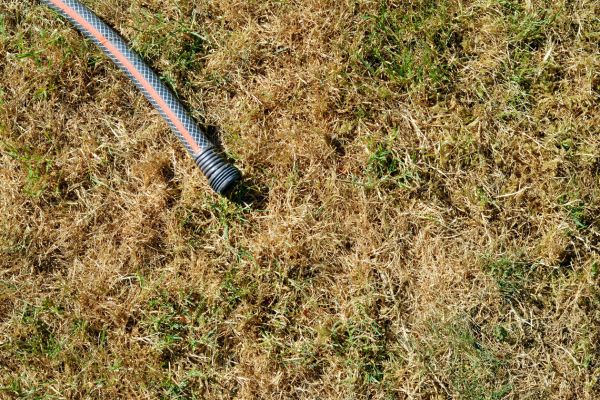
When a lawn doesn’t receive enough water, it will go into survival mode, which may look like winter dormancy. Grass will become dry and discolored, quickly turning brown or bluish-gray during a season it should be a thriving green. Grass blades may start to wilt or curl inward as they lose moisture. This is a sign the grass is trying to conserve water. You can also use the “footprinting test” to check if your lawn needs water. If you walk through the lawn, and notice footprints remain behind you, the lawn is in a state of stress. The grass can’t spring back up the way a healthy lawn would. It’s important to know how to tell the difference between drought stress and other concerns like fall armyworms.
Summer Lawn Watering Tips to Prevent Dry Grass
To prevent your lawn from falling victim to drought in Texas, it’s important to know how to water it efficiently. Proper watering is not only crucial for your lawn but vital if you’re in an area of Texas under watering restrictions.
Here are a few tips to water your grass more efficiently:
- Morning Watering: Between 5 AM to 10 AM is optimal. Watering during cooler hours reduces evaporation and prevents water from sitting on the soil surface, which can lead to runoff and weaker turf defenses.
- Quality Over Quantity: Adjust your routine to water deeply and infrequently, aiming for about 1.5 inches of water per week. It’s better to water longer and less often, than short daily spurts. Deep watering encourages deeper root growth.
- Cycle and Soak: Use techniques like “Cycle and Soak” to minimize runoff and maximize absorption. This basically involves breaking your watering session into shorter cycles with breaks in between. It will give the soil time to absorb the water before adding more and limit waste, which is a win all around.
- Measure Your Irrigation: The tuna can method is a common way to monitor the output of your irrigation system. Use a small container, like a tuna can or cat food can, and measure how long it takes your lawn sprinklers to fill the can. Adjust your schedule accordingly.
Lawn Repair for Drought-Stressed Dry Grass in Texas
Combatting drought stress is easier with Aggieland Green’s Stress Helper lawn service. This bio-stimulant and wetting agent application enhances grass recovery, protects vital plant parts, and reduces soil hydrophobia. Designed for effectiveness, Stress Helper remains active in the soil for up to 28 days, ensuring ongoing protection until natural rainfall returns. This treatment can’t reverse damage to a lawn, but it will help preserve current health and prevent further damage. For lawns receiving a healthy amount of water, this service will help maintain color and boost watering efficiency. Contact us today to discover how Stress Helper can help revitalize and protect your drought-stressed lawn.
Local Lawn Care Experts Near You
At Aggieland Green, we have years of experience helping homeowners in College Station, Bryan, and Houston maintain a healthy lawn year-round. We know Texas lawns and the grasses that can thrive throughout the harsh seasons. We’re here to provide solutions which is why we provide essential watering tips to help your lawn thrive during droughts, along with introducing our innovative Stress Helper service. Our other lawn care services include weed control and fertilization, lawn aeration, tree and shrub care, pest control, and mosquito control in Houston. Contact us today for a free quote!