
Summer Stress Alerts
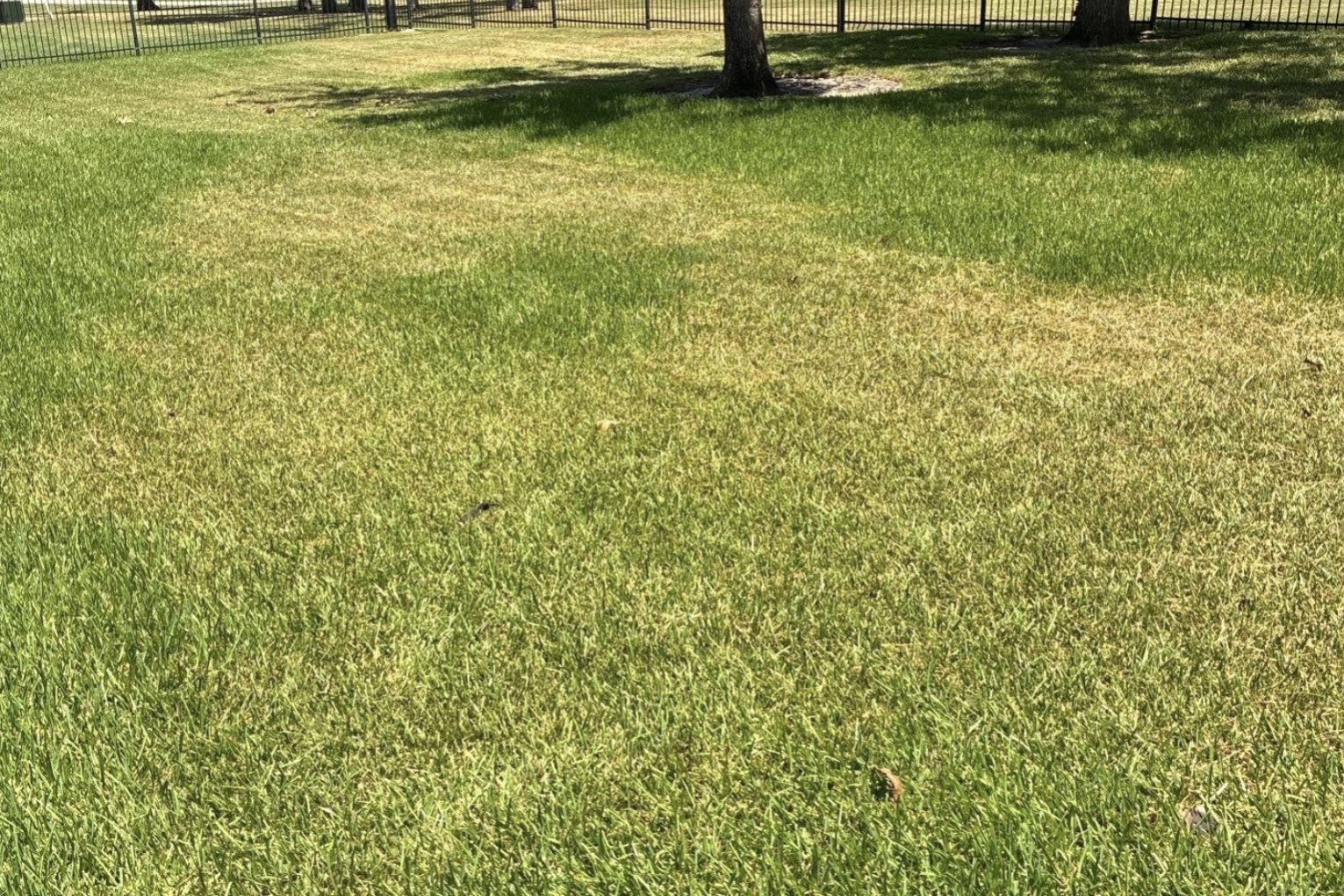
August weather trends are here, bringing daily high temperatures in the upper 90s and significantly less rainfall than we’ve seen earlier in the season. This is the time of year when we begin to see clear signs of heat stress in lawns of all grass types.
A Common Concern for Texas Lawns
If you notice discoloration in your lawn by mid-summer, it could mean a variety of things, from lawn pests, diseases, to drought stress, and more. At this time of year, more likely than not, color issues are linked to heat stress, and you just need supplemental watering.
For Aggieland Green customers, your lawn is already protected from lawn-damaging insects thanks to our proactive treatments. And as always, we are treating weeds with each visit in an effort to suppress competition for precious resources like water. The best thing to do is observe and adjust your watering habits if you begin to see pale or wilted grass. If you notice areas that are declining rapidly, we encourage you to troubleshoot with a test cycle to check for broken sprinkler heads or clogged nozzles.
Signs of Heat Stress
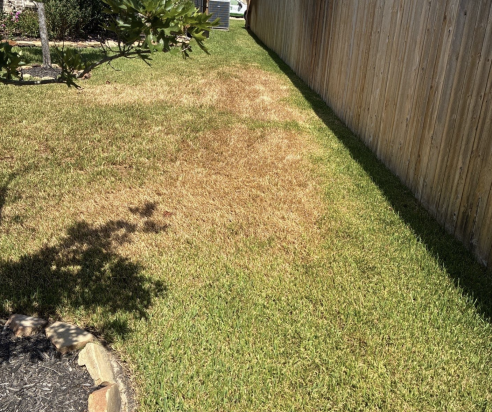
- Typically stress begins to present itself in isolated areas of the yard. These spots are more likely seen in areas of full sun and in lawns without irrigation systems.
- They may look a bit grey or pale in comparison to the surrounding turf.
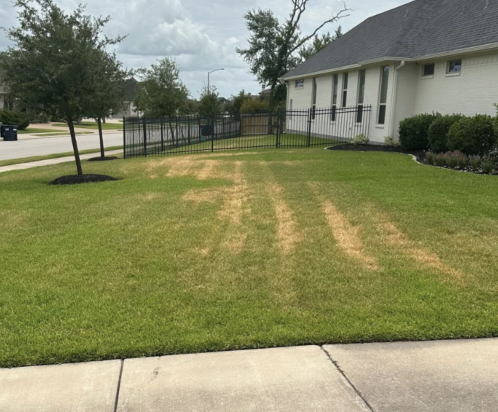
- Heat tracks may also begin to pop up after mowing.
- Areas that have chronic coverage issues will likely grow common bermudagrass or remain thin.
The good news is that hand watering smaller areas or evaluating your station run times in larger sections will replenish these areas in about a week.
Summer Lawn Watering Tips
We recommend watering in the early morning hours, between 3 a.m. and 8 a.m., to reduce evaporation and lower the risk of disease. For added relief from mower stress, we suggest bracketing your mowing day with watering days.
Example:
If your lawn is mowed on Fridays, schedule your irrigation to run Thursday and Saturday, plus one additional day. On watering days, set your system to run multiple start times (e.g., 3 a.m., 5 a.m., and 7 a.m.) to allow each zone to complete its cycle multiple times. This is known as the “cycle and soak” method and is widely regarded as the most efficient watering practice. Click here view our seasonal watering guidelines.
While it’s a bit early, watering restrictions during the “dog days of summer” are likely in the weeks ahead. The good news: proper irrigation is still possible even on a two-day-per-week schedule, as long as you follow the cycle and soak method above.
Combat Heat Stress with Aggieland Green
If you’re experiencing heat or drought stress in your lawn or want to add proactive protection for the continuing heat wave, ask us about our Stress Helper service. This is a one-time treatment to help combat the implications of this summer’s heat and lack of rain. This treatment works by combining a bio-stimulant and wetting agent to help protect the vital parts of the grass plant (crown and root mass), improve recovery time, and reduce soil repellency, thus maximizing irrigation efficiency. The application is a liquid, broadcast treatment that will last in the soil for approximately 28 days, giving your lawn the best chance at recovery when more favorable conditions return.
We can’t stop the heat, but we can help combat drought stress pressures in your lawn with our Stress Helper service. Contact us today to get a quote!
Topdressing for Long-Term Improvement
Lawns that lack a healthy layer of topsoil may still benefit this season from the addition of a 1″ layer of sandy loam mix. Be sure to avoid topsoil with added manure during hot weather, as it can burn your lawn. Instead, look for products with organic materials like peat moss.
We recommend Scott’s Lawn and Garden Soil Conditioner, which contains both peat moss and organic matter. Peat moss improves water retention, helps lower pH in naturally alkaline soils, supports color improvement, and helps suppress take-all root rot.
Protecting Your Trees and Shrubs
Trees and shrub damage from foliar insects and disease are suppressed on our Grow and Thrive programs. Our landscape is currently adjusting away from frequent rains and rising temperatures and therefore may show momentary signs of stress.
- Minor leaf drop or temporary wilting during the summertime can merely signal that the tree is trying to lighten the load as it adjusts to the climbing temperatures.
- Severe leaf drop is uncommon.
The best thing we can do for our landscapes this month is water no more than 2-3 days per week in the absence of rain. Pools of standing water in our beds has damaging effects on plant color and root health. Beds that get morning sun and shade in the afternoon often remain oversaturated if zones run too long or too often. If you observe standing water in your beds, please consider shaving a few minutes off those zones.
How to Combat Summer Pests and Mosquitoes
Our mosquito and pest control services are working to reduce the presence of biting and stinging insects. We recommend checking to make sure your gutters are free of leaf clutter and pine needles in an effort to suppress mosquito breeding grounds. Landscaping materials around the perimeter of your home could also harbor spiders, scorpions or even snakes. We recommend keeping your backyard clear of standing water. Please understand that our technicians are not legally able to treat drains and sewers but there should be other means of addressing your mosquitoes during your visit.